
You leave the dentist with a tooth that is “fixed for now,” then the real questions start on the drive home. Can your child chew on that side? Will the temporary crown fall off at dinner? Is that rough edge normal, or is something wrong? When a dentist places a short term repair, the work may look simple, but living with it can feel uncertain, especially when considering longer-term options like Perrysburg dental implants.
That stress makes sense. Temporary dental restorations are meant to protect a tooth between visits, not act as the final repair. They help you function, reduce sensitivity, and hold space for the permanent treatment. They also need care, because they are more likely to loosen, crack, or wear down than the final version. Families do better when they know what the temporary is doing, what can go wrong, and when to call the dentist.
Temporary dental restorations protect the tooth while treatment is still in progress
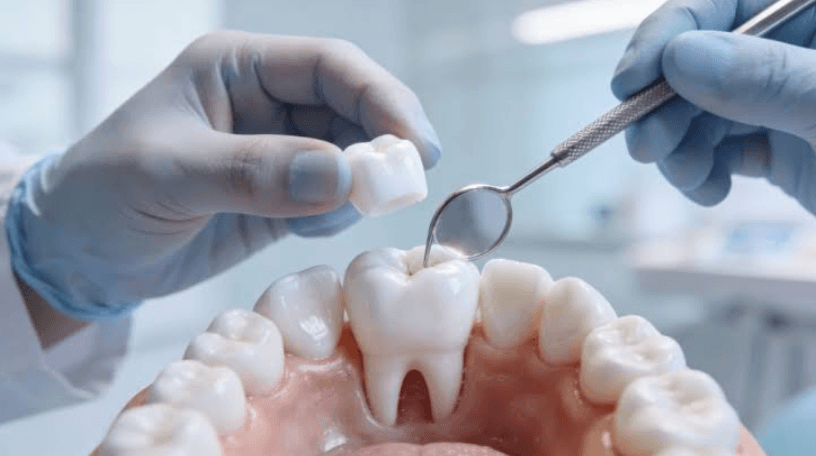
A temporary dental restoration can be a filling, crown, bridge, or other short term covering placed until the final one is ready. Dentists use them after tooth preparation, root canal treatment, damage from decay, or a broken tooth. If a permanent crown is being made in a lab, a temporary crown covers the tooth in the meantime. The same idea applies to some fillings and other repairs.
The job is simple. It shields the tooth, lowers sensitivity, and helps you chew and speak with less discomfort. According to patient guidance on dental crowns from the University of Bristol, temporary crowns are commonly used while the permanent crown is being made. That gap matters more than most people expect, because an exposed prepared tooth can become painful fast.
Children and teens often struggle with temporary restorations because they are still learning how careful they need to be. Adults have their own issues. You may be managing work, school pickups, sports, and meals, and suddenly one sticky snack or one hard bite can shift the restoration. That does not always mean the treatment failed. It usually means the temporary did exactly what it was designed to do, which is hold on long enough to get you to the next step.
Temporary fillings and crowns come with limits that families should expect
Temporary fillings and crowns are not built for long term wear. The materials are weaker than permanent options, and the cement used for a temporary crown is often meant to be easier to remove later. That is good for the dentist, but it also means your family needs to be more cautious at home.
You might notice mild sensitivity to cold, pressure, or air. That can be normal for a short time, especially if the tooth had deep decay or recent treatment. Information from the National Institute of Dental and Craniofacial Research on dental fillings explains that some sensitivity after a filling can happen and often settles. Pain that gets stronger, swelling, a bad taste, or a restoration that moves when you touch it is different. Those signs need a call to the dental office.
There is also the daily reality of eating with a temporary. Gum, caramel, hard candy, ice, popcorn kernels, and crusty bread can pull or crack it. If your child says, “It feels weird,” pay attention. Kids often describe looseness, high bite, or sharp edges in vague ways. Adults do this too, especially when they are trying to ignore discomfort and get through the day.
Provisional dental work can also affect the way your bite meets. If the tooth feels too tall, you may start chewing on the other side, clenching, or waking with jaw soreness. A small adjustment in the office can make a big difference. Waiting too long can turn a minor issue into a headache, sore jaw, or a damaged temporary.
Home care and professional care are not equal when a temporary restoration has a problem
When a temporary comes loose, many families search for a quick fix. Drugstores sell temporary dental cement, and that may sound reassuring when the office is closed. The problem is that home products can hide a bigger issue, trap debris, or hold the restoration in the wrong position. If the tooth underneath is exposed, decay and irritation can move in quickly.
| Situation | Home response | Professional care |
|---|---|---|
| Mild sensitivity after placement | Eat soft foods, avoid very hot or cold drinks, brush gently | Needed if pain worsens or lasts |
| Temporary crown feels loose | Do not chew on that side, keep the crown if it comes off, call the office | Re-cement or replace after checking fit and tooth condition |
| Sharp edge or rough spot | Avoid irritating the area with hard foods | Smooth adjustment to protect cheek, tongue, and bite |
| Swelling, severe pain, bad taste, fever | Do not rely on temporary repair kits | Urgent dental evaluation |
MedlinePlus guidance on dental emergencies supports getting prompt care when there is severe pain, swelling, or a lost restoration that leaves the tooth vulnerable. The key difference is this. Home care can protect the area for a few hours. It does not replace diagnosis.
Families can reduce problems with temporary tooth repairs by acting early
1. Protect the temporary from food and pressure.
Choose softer foods for a few days, cut food into smaller pieces, and chew on the other side when possible. Skip sticky candy, ice, nuts, and anything that pulls. If your child has a temporary, remind them before school, sports, and snacks. Most failures happen during ordinary moments, not dramatic ones.
2. Keep the area clean without being rough.
Brush gently around the tooth and floss carefully. If the dentist gave special flossing instructions for a temporary crown, follow them exactly. Snapping floss up between teeth can lift some temporaries. Slide floss out to the side if that is what your dentist recommended. Clean teeth heal better and hurt less.
3. Treat changes as useful information, not something to push through.
If the bite feels off, the tooth becomes more sensitive, or the temporary moves, contact your family dentist before it turns into a weekend problem. A small repair is easier and less expensive than replacing a lost temporary or treating a newly irritated tooth. This matters for any dental restoration, especially one that was only meant to last a short time.
Temporary restorations work best when families know what to watch for
A temporary restoration is a bridge between the problem and the final fix. It is not supposed to feel perfect or last forever, but it should protect the tooth and let you get through daily life without constant worry. If something feels wrong, trust that instinct. Pain, looseness, swelling, or a bite that suddenly feels high deserve attention. Steady care at home and quick follow up with your family dentist can keep a small issue from becoming a bigger one.
If someone in your family has a temporary dental restoration and you are unsure whether it is healing normally, contact your family dentist for guidance and the next step.