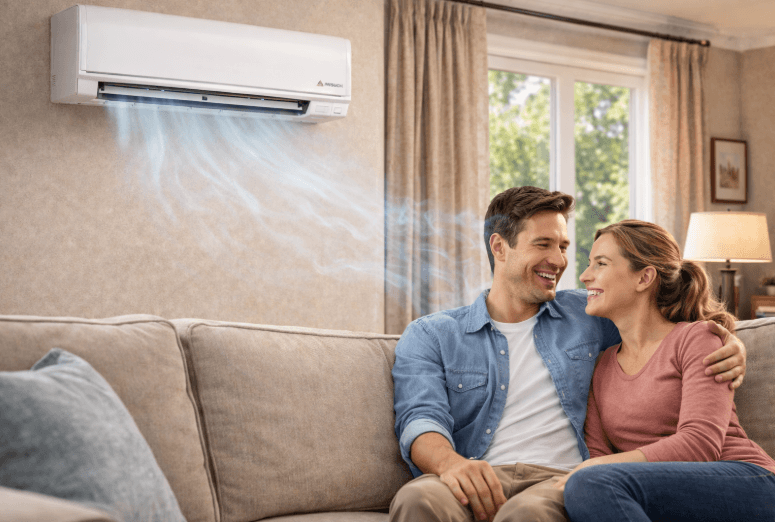

Choosing an efficient way to heat and cool a home requires careful consideration of comfort, climate, property design, and long-term performance. A Mitsubishi heat pump can provide heating during colder months and cooling when temperatures rise, allowing homeowners to manage year-round indoor comfort with one type of system. Rather than generating all heating energy directly, heat pump technology transfers thermal energy between indoor and outdoor environments.
Before choosing a system, homeowners should understand how heat pumps operate, why sizing matters, where equipment should be installed, and what routine maintenance involves. These factors can significantly influence comfort and overall performance.
What Is a Mitsubishi Heat Pump?
A heat pump is a reversible heating and cooling system. In heating mode, it extracts available thermal energy from outdoor air and transfers that energy indoors. During summer, the process reverses, removing heat from indoor spaces and releasing it outdoors.
This ability to reverse operation makes a Mitsubishi heat pump suitable for homeowners seeking both heating and cooling from a single system concept.
Unlike conventional systems that may use completely separate equipment for each season, heat pumps can operate throughout much of the year.
How Does Heating Work in Cold Weather?
Outdoor air still contains thermal energy when temperatures are low. A heat pump uses a refrigeration cycle to capture and transfer that energy indoors.
As outdoor temperatures fall, however, the heating requirement of the home generally increases. System capacity and operating conditions therefore become particularly important in colder climates.
Proper equipment selection helps ensure that the Mitsubishi heat pump is matched appropriately to the home’s heating demand.
Benefits of Using Heat Pump Technology
The ability to provide heating and cooling is one of the most noticeable advantages of heat pump technology. However, homeowners may also appreciate flexible temperature control and efficient heat transfer.
Actual results depend on the property, installation, equipment configuration, climate, and operating habits.
Year-Round Indoor Comfort
Instead of changing between completely different heating and cooling approaches, homeowners can use a Mitsubishi heat pump across multiple seasons.
During transitional weather, the system can provide heating or cooling according to indoor requirements.
This flexibility can be particularly useful in climates where temperatures change significantly between seasons.
Zoned Temperature Control
Certain heat pump configurations can provide independent temperature control for different areas of a home.
For example, bedrooms and living spaces may have different comfort requirements depending on occupancy and time of day.
Zoning can help homeowners focus heating and cooling where it is needed rather than treating every room exactly the same.
Why Correct Heat Pump Sizing Matters
System sizing is one of the most important considerations when selecting heating and cooling equipment.
A Mitsubishi heat pump should not be chosen solely according to floor area. Insulation, windows, air leakage, ceiling height, building orientation, layout, and local weather conditions can all affect heating and cooling requirements.
Oversized Systems
Choosing a larger system does not automatically improve comfort.
Equipment that is significantly oversized may satisfy temperature demands too quickly and operate differently from a properly matched system. Correct sizing supports more appropriate operating cycles and consistent comfort.
Undersized Systems
Equipment that is too small may have difficulty maintaining desired indoor temperatures during demanding conditions.
It may operate for extended periods while attempting to meet the home’s heating or cooling requirements.
A detailed assessment can help determine suitable Mitsubishi heat pump capacity for the property.
Installation Quality Is Critical
Equipment selection is only one part of creating an effective heat pump system.
Installation influences airflow, heat transfer, drainage, controls, and overall operation. Indoor and outdoor components need appropriate placement and configuration.
Choosing Indoor Locations
Indoor equipment should be positioned where conditioned air can circulate effectively through the intended space.
Room shape, furniture, doors, and other physical features can affect airflow. Poor placement may create areas that feel noticeably warmer or cooler than others.
Positioning Outdoor Equipment
The outdoor component requires adequate airflow around it.
Vegetation, leaves, debris, and seasonal accumulation should not unnecessarily obstruct the equipment. Installation should also account for drainage and environmental conditions.
Good placement helps the Mitsubishi heat pump exchange heat effectively throughout different seasons.
Heat Pumps and Home Efficiency
Heating and cooling equipment performs within the larger environment of the building.
A home with inadequate insulation or substantial air leakage may require more energy to maintain comfortable temperatures regardless of the HVAC technology being used.
Improve the Building Envelope
Insulation helps reduce unwanted heat transfer. Weather sealing around suitable doors, windows, and other openings can also help limit unnecessary air leakage.
Addressing these areas can reduce the heating and cooling load placed on a Mitsubishi heat pump.
Consider Window Performance
Windows can contribute to heat loss during winter and heat gain during summer.
Window condition, coverings, orientation, and exposure to sunlight can therefore influence indoor comfort and system demand.
Routine Heat Pump Maintenance
Because heat pumps may operate during both heating and cooling seasons, regular maintenance is important.
Homeowners should check accessible filters, keep airflow paths clear, and monitor system behavior.
Keep Filters Clean
Dirty filters can restrict airflow and reduce comfort.
Filters should be inspected regularly and cleaned or replaced according to the requirements of the specific system.
Watch the Outdoor Unit
The area around outdoor equipment should remain reasonably clear of leaves, vegetation, and other debris.
Homeowners should avoid dismantling components or performing technical internal work without appropriate knowledge.
Signs a Heat Pump Needs Attention
Changes in normal operation can indicate developing problems.
Homeowners should watch for weak airflow, unusual sounds, unexpected cycling, reduced heating or cooling, or noticeable changes in temperature consistency.
A Mitsubishi heat pump that suddenly behaves differently should be inspected rather than ignored.
Unusual Sounds
Some operating sounds are expected, but persistent grinding, rattling, buzzing, or other unfamiliar noises may indicate a problem.
Early investigation can help determine whether a component requires adjustment or repair.
See also: How to Select the Absolute Best Unit and Facing in a New Launch Block
Is a Heat Pump Right for Your Home?
No heating and cooling technology is automatically ideal for every property.
Homeowners should consider climate, building characteristics, available installation locations, insulation, existing systems, and comfort expectations.
A professional assessment can determine the home’s heating and cooling requirements before equipment is selected.
Conclusion
A Mitsubishi heat pump can offer a flexible approach to year-round heating and cooling by transferring heat rather than relying solely on conventional heat generation. However, successful performance depends on correct sizing, thoughtful installation, appropriate airflow, building efficiency, and regular maintenance. Homeowners who evaluate these factors carefully can make a more informed decision and create a heating and cooling setup designed for consistent comfort throughout changing seasons.